





The whole point of mitigation is to stop the damage from growing. Repair is a different job. Mitigation covers the steps taken ahead of repairs so undamaged materials stay that way. In Pomona, our team handles mitigation by controlling the source, removing the water, containing the wet area and stabilizing the structure. Done well, it shrinks the repair that follows and sometimes removes the need for one.
People often use mitigation and restoration to mean the same thing. They are two phases. Mitigation is the emergency phase: stop the loss, limit the spread, stabilize the home. Afterward comes restoration, when dryness is verified and ruined flooring, drywall and finishes get fixed or rebuilt. Because an insurer lists each one separately as well, knowing where you stand in the process is helpful.
Four tasks make up most mitigation visits. Source control, so no new water enters. Extraction, so standing water is gone. Third is containment, where controlled airflow and plastic barriers keep contaminants and moisture away from clean rooms. Stabilization, which means removing materials that cannot be saved, treating surfaces with antimicrobial, and setting air movers and dehumidifiers. Along the way, your belongings and furniture get moved or set up on blocks to keep them safe.
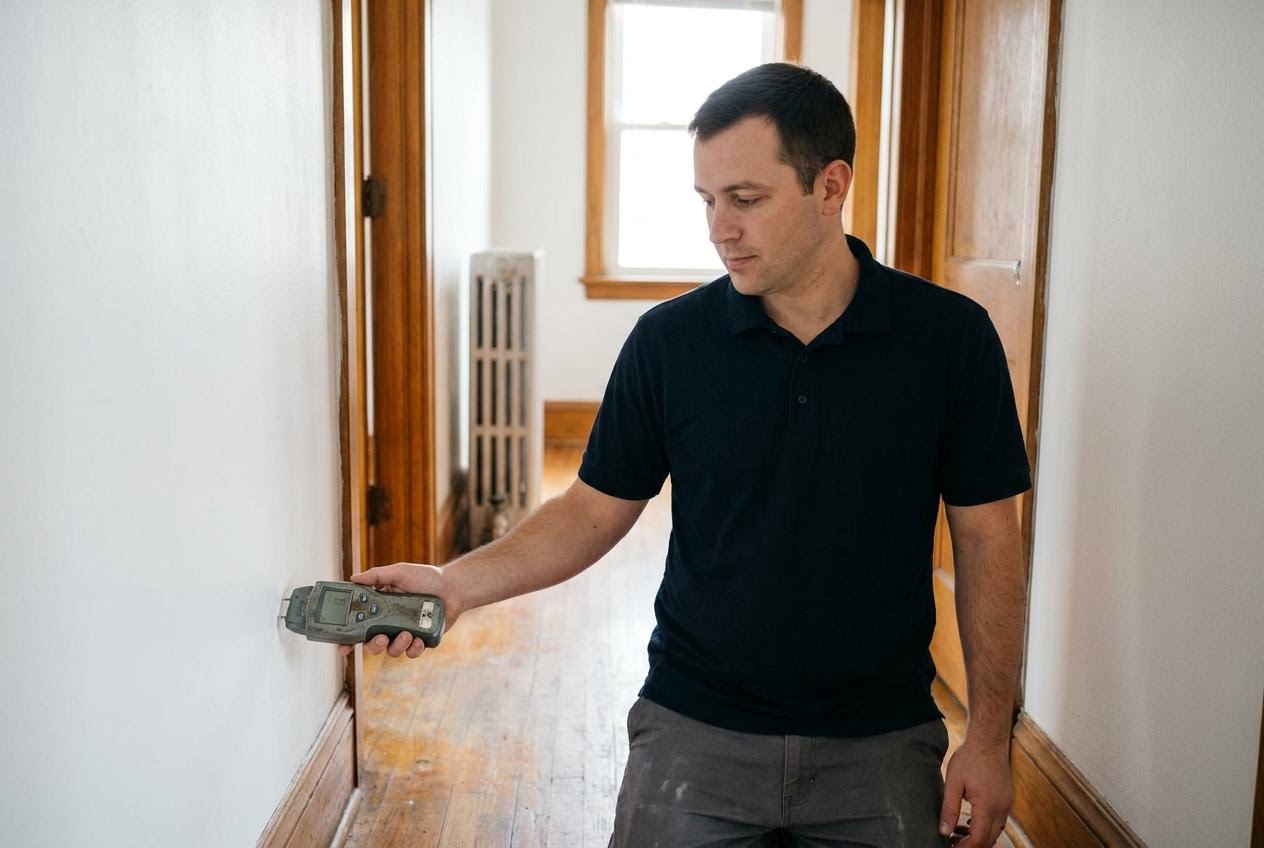
How We Handle Water Damage Mitigation
Our systematic approach delivers quality results on every project. Here's what you can expect when you choose Pomona Restoration:
Stop the Water Source
Depending on the cause, our crew closes the supply, caps a failed line, or covers the entry point with tarps and boards. When the permanent repair calls for a roofer or plumber, we help schedule it.
Extract the Water
We extract standing water using pumps and extraction units, then check carpet and its padding. Drying machines on their own cannot limit damage the way prompt bulk extraction does.
Set Up Containment
Wet rooms are closed off from dry ones with barriers of plastic sheeting and controlled airflow. This keeps humidity, dust and any contaminants from travelling through the house while work is under way.
Stabilize and Dry
Materials past saving come out, an antimicrobial is applied to surfaces, and air movers plus dehumidifiers go in. We log moisture readings each visit until the structure is ready for repairs, usually within 3 to 5 days.
Ready to Solve Your Water Damage Mitigation Problem?
Our IICRC-certified technicians are standing by to help.
Get Help: (814) 361-7475Why Hire a Professional for Water Damage Mitigation?
Doing mitigation well means making a string of quick judgment calls. What drywall stays and dries where it is, and what must be removed? Is the water Category 1, 2 or 3, and has it changed since the leak began? Does the cabinet toe kick need to come off? Our team makes these calls from training and from moisture readings, not from how a surface looks or feels to the hand.
Your insurance claim benefits from proper mitigation too. Owners are required by most policies to take reasonable steps against further damage, and the insurer will ask for evidence. On arrival we take photos, then log moisture readings every day and itemize whatever is removed. The result is a file documenting both the damage and the steps taken. It also gives the repair contractor a clear starting point, with no wet surprises behind new drywall.
Water Damage Mitigation FAQ
Can You Handle Water Damage Mitigation Yourself?
Some simple tasks are suitable for DIY, but most water damage work benefits from professional tools, training, and experience. Here's a comparison:
| Factor | DIY Approach | Professional Service |
|---|---|---|
| Material decisions | Hoping wet materials recover | Meter data drives each removal |
| Isolating wet rooms | Closed doors and towels | Plastic containment with managed airflow |
| Contaminated water | Household bleach where you can see | Treatment chosen by water category |
| Extraction | Soaking it up by hand | Pumps and extractors clear bulk water |
| Proof for insurer | A few phone photos | Daily moisture logs and photo record |
Questions About Water Damage Mitigation?
We provide honest advice and free estimates on all water damage mitigation work.
Call (814) 361-7475 TodayWhen to Call for Water Damage Mitigation in Pomona
Catching these issues early helps you avoid costly problems and protect your property. Watch for these telltale signs that professional help is needed:
- Your insurer has told you to take reasonable steps to prevent further damage.
- A plumber fixed the pipe but nobody has dealt with the water.
- Along the floor, water is travelling out of one room and into another.
- The leak is fixed, yet cabinets, walls or flooring remain wet.
- Baseboards are swelling or pulling away from the wall after a leak.
- The carpet pad is soaked through even where the surface seems only damp.
- Water went beneath kitchen or bath cabinets, out of reach of towels and fans.
Early Action Saves Money
What seems like a minor issue today can turn into a major expense tomorrow. If you notice any of these signs, contact Pomona Restoration at (814) 361-7475 for a prompt evaluation.
Maintenance Tips for Water Damage Mitigation
A little prevention goes a long way in avoiding expensive restoration emergencies. Follow these tips from our IICRC-certified technicians:
- Keep gutters clear and downspouts pointed away from the foundation of the house.
- Roof penetrations, door frames and window edges should be sealed ahead of the next big storm.
- Check under sinks and around toilets monthly for drips, stains or soft flooring.
- Have your water heater inspected yearly and replace it before the tank fails.
- Install an automatic shutoff valve that closes the main when a leak is detected.
- Ground next to the foundation should fall away from it, which keeps water from collecting there.
Talk to a Water Damage Mitigation Expert
The sooner you call, the sooner we can help. Reach Pomona Restoration for same-day service.
Call (814) 361-7475 Now